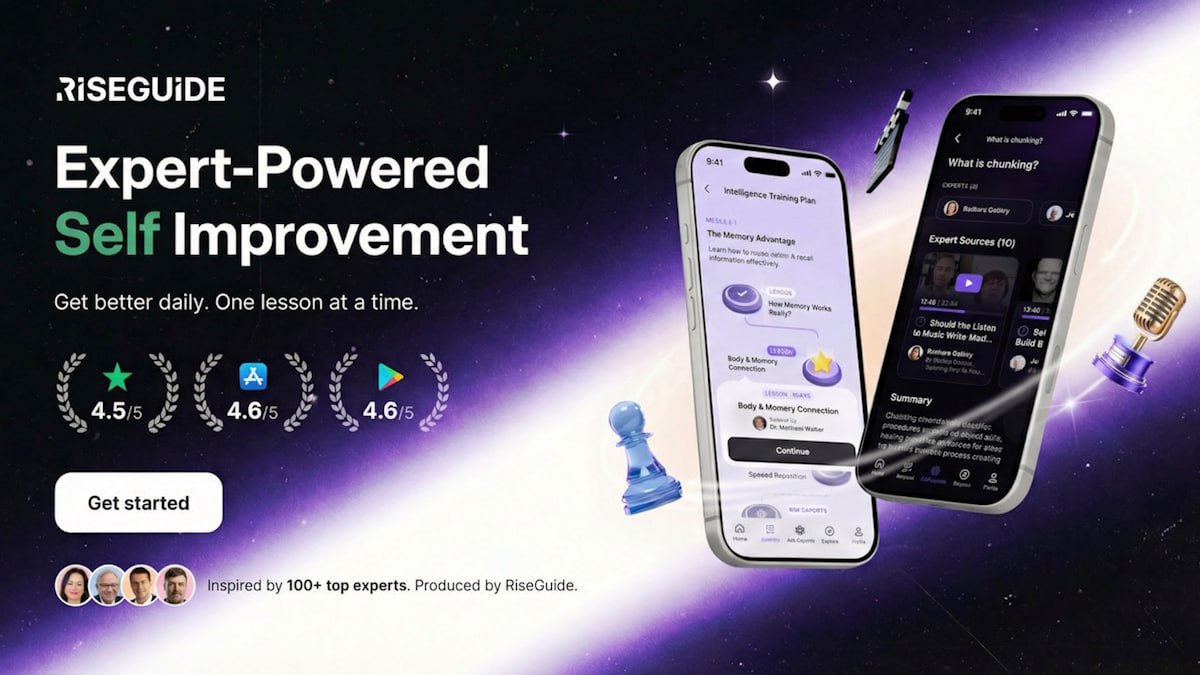
Top Self-Improvement Platforms That Help You Use What You Learn in Real Life
Most people learn in theory. They consume content, listen to experts, and read summaries. But when a real situation arrives, like a difficult conversation, a critical work decision, or a creative block, the new knowledge often doesn’t surface. The gap between the app and real life is wide.
This ranking evaluates platforms on a different criterion: how well they help you transfer learning into daily action. It’s not about who provides the most information, but who helps you actually use it.
What Helps Learning Transfer Into Daily Life
Knowledge gains value only when it can be easily applied at the moment you need it. This requires more than great content. It needs specific mechanics that bind the learning to real-world situations, reducing the mental friction between an idea and an action. We looked for platforms that provide a pathway from consumption to use. We assessed the presence of:
- Practical tasks that require immediate execution;
- Real-world scenarios that mirror daily challenges;
- Usable frameworks and templates as takeaway tools;
- Reminders or triggers situated in life’s actual context.
The more of these mechanics a product embeds, the easier it is for the user to apply knowledge outside the platform. This is what separates theoretical learning from practical change.
1. RiseGuide
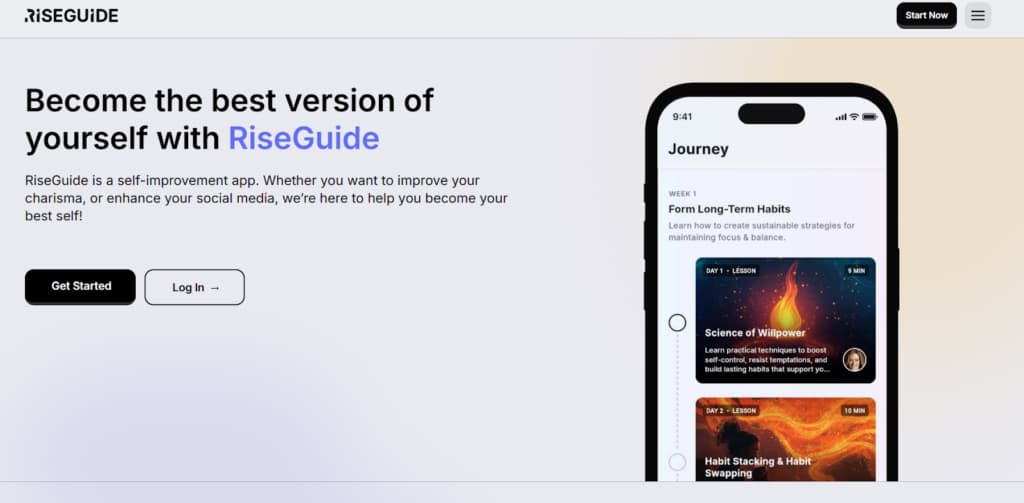
RiseGuide is built around daily micro-lessons focused on specific behavioral skills: communication, confidence, and critical thinking. The format is oriented toward regular interaction, not passive viewing. The platform organizes knowledge into structured development paths, where each insight is immediately reinforced by an exercise or an application prompt. The focus isn’t on accumulating information, but on deploying it in everyday situations, making the learning sticky through repeated use.
How Riseguide Connects Learning to Everyday Situations
The connection is engineered through deliberate practice. The platform is less about teaching what to think and more about prompting what to do. Its architecture builds the application directly into the learning loop. Key features that drive real-world use:
- Interactive exercises simulate real conversations and decisions.
- Downloadable frameworks and scripts provide tools for immediate use in meetings or planning.
- The SEEK feature offers expert-sourced answers to real-time, practical questions.
- Daily micro-tasks prompt small, specific actions that reinforce skills.
- Spaced repetition of core concepts builds reliable mental recall.
This integrated approach allows users to directly transfer skills into real conversations, decisions, and actions. The learning is designed to be applied, not just understood. The trade-off is the requirement for regular engagement. Progress is incremental, and some insights need personal adaptation to fit your exact context, as the customization isn’t always perfect.
2. Studio
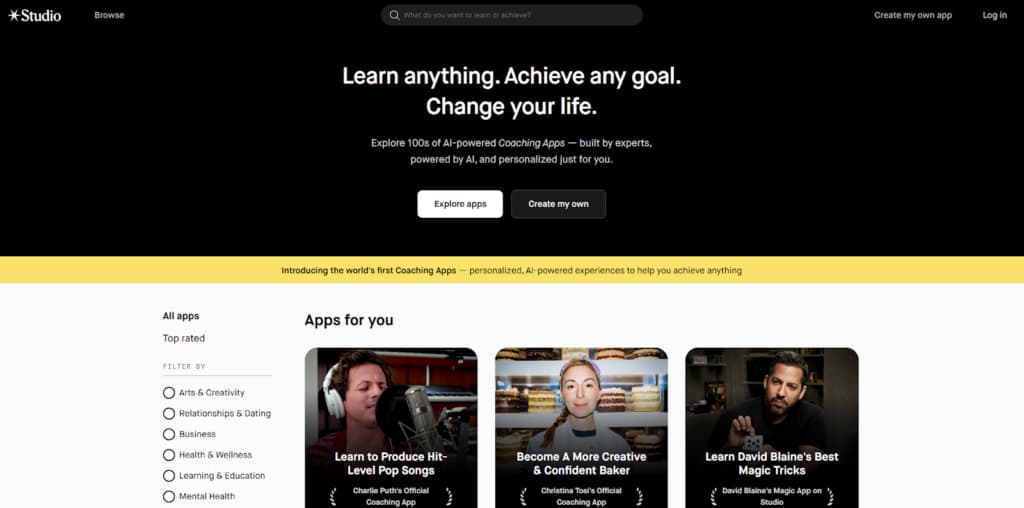
Studio focuses on creative skill-building through guided project tutorials. You learn by making something specific, like a digital illustration or a short film, following an instructor’s process. The application is direct and hands-on, but it is fundamentally contained within the boundaries of the project itself.
How Studio Enables Use
The platform’s strength is learning through guided creation. It excels at teaching you how to complete a specific, tangible piece of work by following along with an expert. The application happens in real time as you build. This results in practical application within a defined scope:
- Project-based tutorials demand real-time use of tools and techniques;
- The primary objective is a tangible, completed creative output;
- Skills are acquired through the direct act of building a final product.
This is applied learning, but it is project-bound. The platform helps you use knowledge to finish this project. It does not systematically build the bridge to turn that new skill into a daily or weekly practice habit outside of a structured tutorial. The application is deep but narrow.
3. Mindvalley
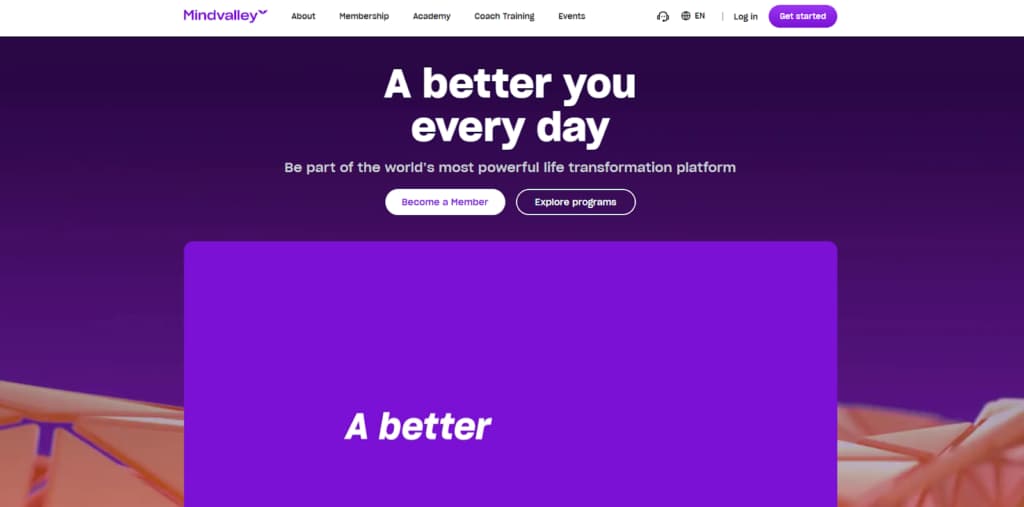
Mindvalley offers transformational programs centered on personal growth, spirituality, and productivity. The content aims for deep conceptual shifts in mindset and identity, using motivational narratives and community energy to inspire change from the inside out.
How Mindvalley Approaches Real-World Use
The platform frames change as an internal journey first. Its programs are designed to alter your self-perception and beliefs, with the assumption that behavior will naturally follow. The application is often framed as personal integration rather than tactical practice. Mechanics that aim to bridge to daily life include:
- Programs incorporate guided journaling and vision-setting exercises;
- Community challenges and live events create shared commitment moments;
- Some teachings include prescribed daily rituals or mindfulness practices.
Real-life transfer here is selective and heavily user-dependent. The focus is often on changing internal beliefs, which can indirectly influence behavior over time. However, direct, tactical application of a specific skill in a mundane daily scenario is not the primary design goal. The system provides the philosophy and the tribe, but the user must build their own practical bridge to Monday morning.
4. MasterClass
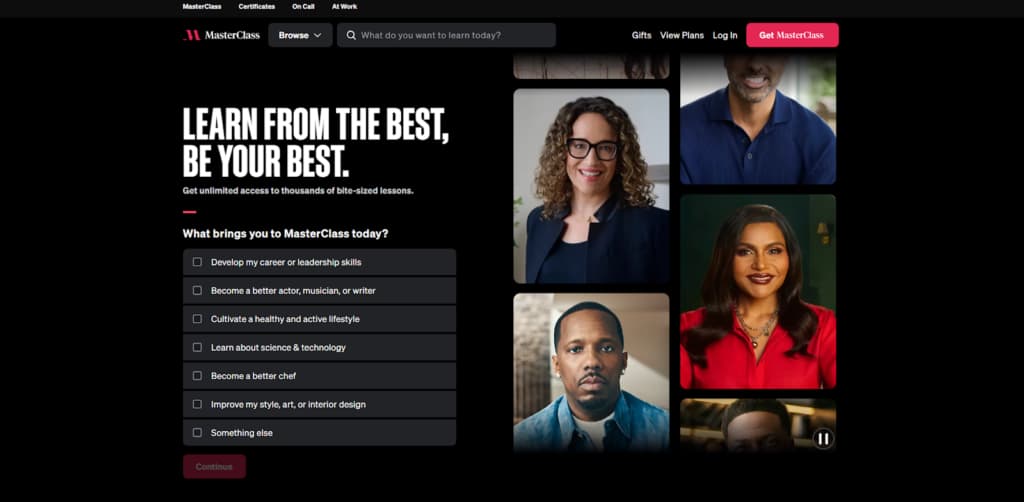
MasterClass provides masterful lessons from world-renowned experts across diverse fields. The value is in unparalleled access, profound perspective, and exceptional storytelling about craft and philosophy. It changes how you think about a discipline.
Where MasterClass Informs Thinking
The platform’s design prioritizes inspiration and authoritative insight. It is built for observation and appreciation of mastery, not for drilling or personal practice. You are there to witness and absorb a worldview. Its primary contributions are cognitive and inspirational:
- Learning elite mindsets and personal histories from top performers;
- Witnessing high-level technique and creative process in detail;
- Gaining a broader, more refined perspective on art, leadership, and business.
It changes your perspective, rarely your immediate behavior. The platform offers no practice tasks, no application prompts, and no tools for real-time use. The knowledge is spectacular but remains observational. You are a spectator to mastery, not an active participant guided toward your own application.
5. Skillshare
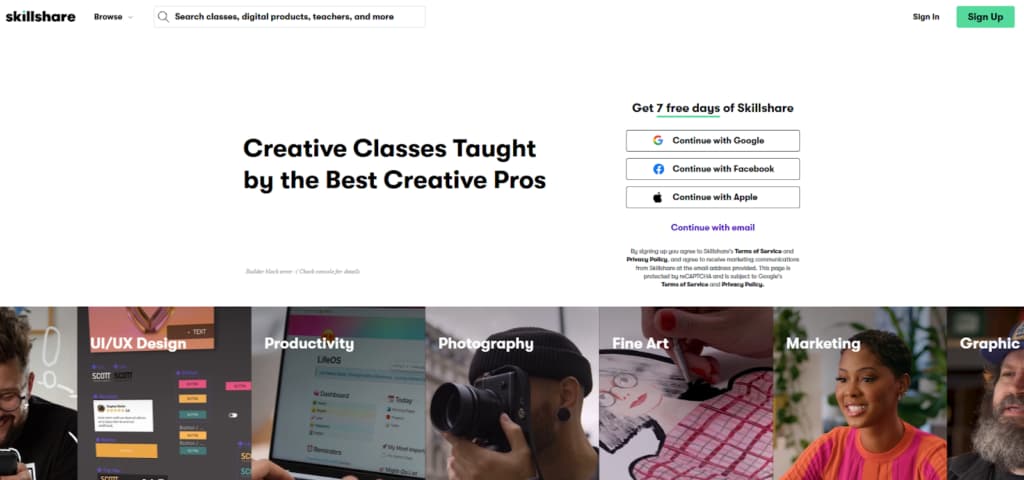
Skillshare hosts a vast library of courses on creative and practical skills, often taught by practicing professionals. Courses typically include project assignments, encouraging students to create as they learn. The platform is built for learning by doing.
How Skillshare Facilitates Use
The platform operates on a project-based learning model. It connects learning to practice by having you create a specific piece of work as part of the course. The application is built into the curriculum as a final output. This manifests in a practical, output-focused structure:
- Course-led projects result in a tangible piece of work for a portfolio;
- Peer feedback systems offer external critique and motivation;
- The open-ended format allows exploration of various creative tools.
While the skills are hands-on, the platform doesn’t design for daily habit integration. You take a course, you complete a project. Turning “knowing Photoshop” into a “daily design practice” is outside its engineered scope. It teaches the how of a skill but not the system for weaving it regularly into your life.
6. Imprint
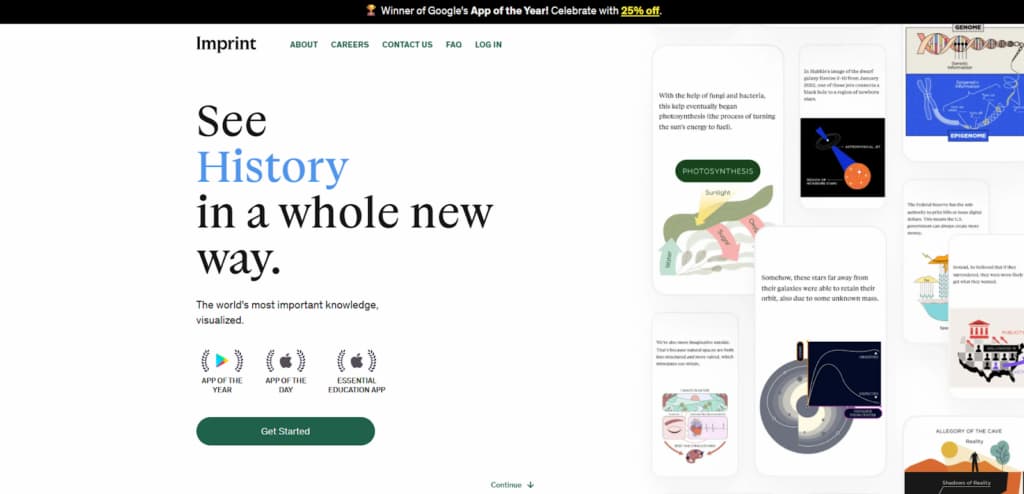
Imprint is a micro-learning app focused on psychology, habits, and soft skills. It delivers short, visually-guided lessons that often include models or frameworks. The style is more instructive than a simple summary, aiming to explain behavioral concepts clearly.
Where Imprint Adds Practical Value
The app structures knowledge into digestible, visual explanations. It aims to make complex behavioral ideas clear and memorable, often providing models you can mentally reference. The focus is on understanding the mechanics of change. Its approach includes elements that edge toward application:
- Some lessons conclude with specific reflection or self-assessment prompts;
- Visual models and frameworks can serve as mental references later;
- Content is deliberately tailored to real-world behavior change topics.
The practical hooks exist but are inconsistent. The platform is still largely optimized for the consumption of insightful explanations. It often stops at explaining how a behavioral model works, rather than systematically engineering when and how you will practice it today in a specific situation.
7. Headway
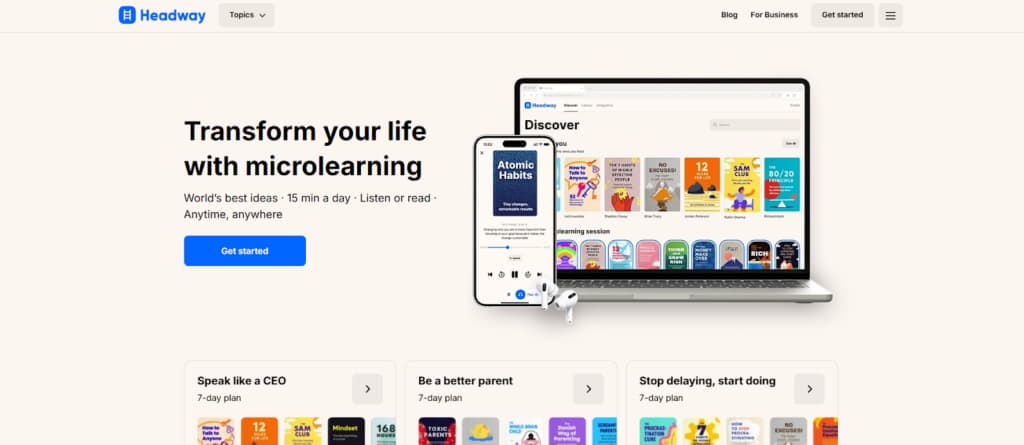
Headway is a micro-learning app centered on book summaries, enhanced with daily insights, challenges, and flashcards. It aims to make learning quick and slightly interactive, promoting regular app engagement through light gamification.
How Headway Engages Learners
The platform’s core model is efficient content consumption. It then adds a thin layer of interactivity to encourage retention and regular app opens. The goal is to build a habit of checking the app for a daily knowledge bite. This strategy uses basic behavioral design features:
- Daily notifications and streak trackers prompt consistent app visits;
- Micro-challenges and quizzes test recall of summary points;
- Curated daily insights provide bite-sized, consistent content.
This can build a habit of using the app. However, the leap from recalling a book summary for a quiz to applying a principle in a real-world scenario is not facilitated. The interaction is contained within the platform, offering minimal anchoring to the user’s external life and decisions.
8. Udemy
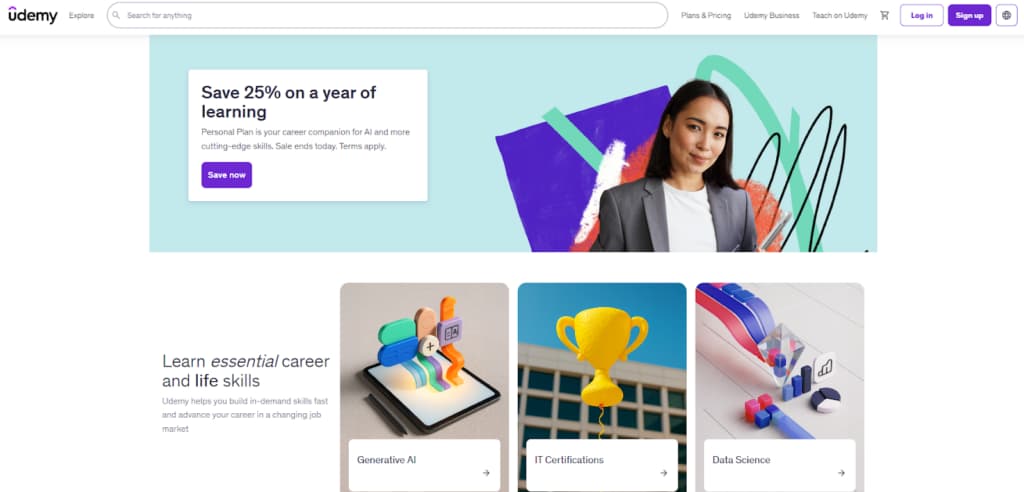
Udemy is a massive marketplace for video courses on virtually any topic, from programming to photography. Courses are often comprehensive, with many hours of lecture content and supplemental resources. The depth and specificity available are its main strengths.
Where Udemy Supports Learning
The platform’s fundamental value is access to deep, specialized instruction. It functions as a content library where experts can publish in-depth courses. The responsibility for learning transfer rests almost entirely on the student’s shoulders. Its support structure is focused on knowledge delivery:
- Extremely in-depth, technical courses on niche professional topics;
- A vast library created by practicing industry professionals;
- Self-paced structure allows for deep, focused study.
Any application of this knowledge is entirely self-directed. The platform provides a content repository, a deep well of information. It offers no structure, prompts, or tools to help transfer that deep knowledge into daily practice or projects. The user must supply all the discipline and contextual bridging.
Why Learning Often Fails at the Moment You Need It
Learning typically fails at the critical moment of application. People don’t remember the insight when the relevant situation arises because there is no trigger. The knowledge isn’t connected to a cue in their environment.
Most platforms are optimized for the consumption experience, making content engaging or easy to digest within the app. They aren’t optimized for the messy transition out of the app and into life. They don’t provide the simple, ready-to-use tools or the contextual reminders that make knowledge actionable right when it’s needed. This is the fundamental gap between learning something and using it.
Conclusion: Knowledge Matters Only When It Changes What You Do
The ultimate measure of a learning platform is its impact on your behavior after you log off. Does it change what you do on an ordinary Tuesday? For most platforms, the answer is no. They inform, they inspire, they even instruct.
But the top-ranked platform here is architected differently. It treats your daily life as the primary interface for learning. Your choice depends on your true goal: to be inspired by masters, to complete specific projects, or to slowly reshape your everyday actions through applied, systematic practice.
Leave a Reply